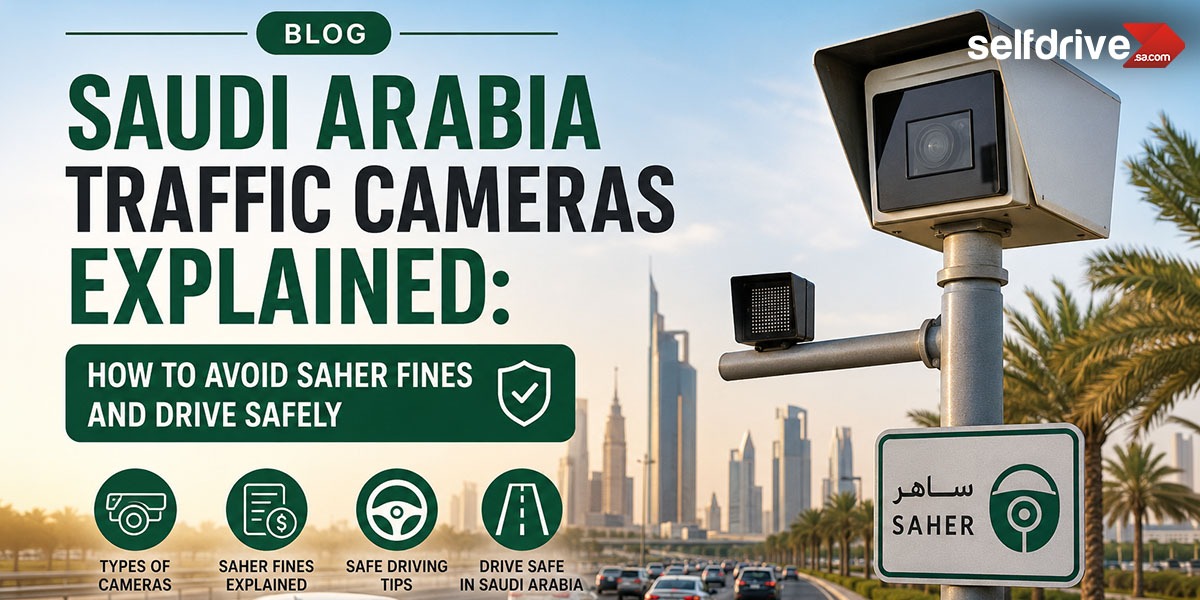
Saudi Arabia has one of the Middle East's most advanced automated traffic enforcement systems. Whether you're a resident, business traveler, tourist, or driving a rental car, understanding the Saher System Saudi Arabia is essential for avoiding expensive traffic fines.
Thousands of Saudi traffic cameras monitor highways, city roads, and major intersections every day. These cameras automatically detect speeding, red-light violations, and several other offenses without requiring a police officer to stop the vehicle.
If you're planning to drive in Riyadh, Jeddah, Dammam, Makkah, Madinah, or anywhere else in the Kingdom, this guide explains everything you need to know about the Saher traffic camera system, how fines are issued, and how rental car drivers are affected.
What Is the Saher System?
The Saher System is Saudi Arabia's automated traffic management and enforcement network operated by the General Directorate of Traffic (Muroor). It combines digital cameras, license plate recognition (LPR), traffic management software, and control centers connected to the Ministry of Interior's National Information Center. Its primary objectives are to improve road safety, reduce accidents, and enforce traffic laws consistently.
The system operates 24/7 across many cities and highways.
Its core functions include:
- Automatic speed enforcement
- Red-light monitoring
- Vehicle identification
- Traffic flow management
- Electronic violation processing
- Real-time traffic monitoring
How Does the Saher Traffic System Work?
The Saher System follows an automated process from detection to issuing a violation.
Step 1: Camera Detects a Violation
Traffic cameras continuously monitor:
- Vehicle speed
- Traffic signals
- Lane movement
- Vehicle position
The system uses radar and digital imaging technology to detect violations.
Step 2: License Plate Recognition
Once a violation occurs, high-resolution cameras capture:
- Vehicle registration plate
- Date
- Time
- Location
- Speed (if applicable)
The License Plate Recognition (LPR) system identifies the registered vehicle owner.
Step 3: Verification
Violation data is transmitted to centralized traffic control systems where it is processed electronically before a traffic ticket is generated.
Step 4: Fine Issued
After processing:
- The violation is registered electronically.
- It appears on the owner's traffic records.
- Registered users typically receive an SMS notification.
- The fine becomes payable through approved government channels.
What Violations Do Saudi Traffic Cameras Detect?
Modern Saudi traffic cameras detect much more than speeding.
Common camera-detected violations include:
1. Speeding
The most common offense detected.
Cameras compare your vehicle speed against the posted speed limit.
2. Running a Red Light
Intersection cameras automatically record vehicles entering after the signal turns red.
3. Crossing Stop Lines Improperly
Some intersections monitor vehicles that stop beyond the designated stop line.
4. Mobile Phone Usage (Selected Locations)
Some advanced camera systems can detect drivers using handheld mobile phones while driving.
5. Seat Belt Violations
Certain cameras identify drivers or front-seat passengers not wearing seat belts.
6. Other Automated Violations
Depending on location and camera type, enforcement may also cover additional traffic offenses supported by Saudi traffic regulations.
Are Cameras Installed Across Saudi Arabia?
Yes.
The Saher network operates in most major cities and continues expanding across the Kingdom.
Major coverage includes:
- Riyadh
- Jeddah
- Makkah
- Madinah
- Dammam
- Khobar
- Taif
- Abha
- Tabuk
- Qassim
- Major expressways
- Intercity highways
Highways also use mobile enforcement units in addition to fixed cameras.
Types of Saudi Traffic Cameras
Fixed Speed Cameras
Installed permanently on:
- Highways
- Urban roads
- Major intersections
Red-Light Cameras
Located at busy traffic signals.
They monitor:
- Signal compliance
- Stop line violations
Mobile Speed Cameras
Traffic authorities also use portable radar cameras placed at changing locations.
Because these are relocated frequently, drivers should obey posted speed limits everywhere rather than relying on known camera locations.
How Quickly Are Saher Fines Issued?
There is no guaranteed timeframe.
Many violations appear within hours or a few days, although processing time can vary depending on verification procedures and administrative factors. The official process is electronic, and notifications are generally sent once the violation is registered.
Can Rental Cars Receive Saher Fines?
Yes.
This is one of the most common concerns for visitors.
The camera records the vehicle, not the driver.
If you're driving a rental car:
- The violation is initially linked to the rental vehicle.
- The rental company is notified through the registered vehicle details.
- The rental company usually charges the renter according to the rental agreement.
- Administrative processing fees may also apply depending on the company's policy.
Always read your rental agreement carefully before driving.
Who Pays Saher Fines on Rental Cars?
Usually:
- The renter pays the traffic fine.
- The rental company processes the payment.
- Administrative charges may be added.
Many rental companies deduct the amount from:
- Security deposit
- Credit card on file
- Final rental invoice
How Can Drivers Check Traffic Violations?
Drivers can check violations using official government platforms and services, including the Ministry of Interior's traffic services and related e-services. Residents often use their government accounts to view violations, while visitors renting vehicles may need to obtain details from the rental company if the vehicle is registered in the company's name.
Information typically includes:
- Violation number
- Date
- Time
- Location
- Amount due
Can Drivers Dispute a Saher Fine?
Yes. Saudi Arabia provides an official process for objecting to eligible traffic violations, generally within a specified period after the violation is registered. Drivers should submit disputes through the designated government e-service rather than ignoring the fine.
Common Camera Violations That Cost Drivers Money
The most frequently recorded offenses include:
- Driving above the speed limit
- Running red lights
- Using a mobile phone while driving
- Not wearing a seat belt
- Ignoring traffic signals
- Improper lane discipline in monitored areas
Tips to Avoid Saher Camera Fines
Avoiding fines is straightforward if you consistently follow traffic rules.
Follow Posted Speed Limits
Speed limits can change frequently between highways and urban roads. Always watch roadside signs.
Don't Brake Only Near Cameras
Some drivers slow down only when they see a camera. Mobile cameras make this risky. Maintain a legal speed throughout your journey.
Wear Your Seat Belt
Ensure every occupant who is required to wear a seat belt is properly restrained before moving.
Avoid Mobile Phone Use
Use:
- Bluetooth
- Hands-free systems
- Pull over safely if you need to use your phone
Stop Before the White Line
At intersections:
- Stop completely.
- Do not cross after the signal changes.
- Never accelerate through a yellow light if it is unsafe.
Follow Lane Rules
Stay in the correct lane and avoid sudden or unsafe lane changes.
Drive Carefully in Rental Cars
Many tourists assume fines won't reach them.
In reality:
- Rental companies receive violation records.
- Charges are typically passed to the renter.
- Additional administrative fees may apply.
Why Saudi Arabia Uses the Saher System
The Kingdom introduced Saher to improve road safety through consistent and technology-driven enforcement.
Benefits include:
- Fewer dangerous driving behaviors
- Faster violation processing
- Improved traffic flow
- Better compliance with traffic laws
- Enhanced public safety
Final Thoughts
The Saher System Saudi Arabia has transformed traffic enforcement by making it faster, more accurate, and largely automated. Whether you're commuting daily, visiting the Kingdom, or driving a rental car, understanding how Saudi traffic cameras work can help you avoid unnecessary fines and enjoy a safer journey.
The best strategy is simple: obey speed limits, wear your seat belt, avoid distractions, and follow traffic signals. Safe driving not only keeps you compliant with the law but also contributes to safer roads for everyone in Saudi Arabia.